When a technician services a conveyor belt without isolating its power source, a simple miscommunication can trigger startup—turning routine maintenance into a life-altering incident. This is exactly why a tagout lockout procedure exists: to eliminate preventable injuries caused by unexpected energization or release of stored energy. While often grouped under the acronym LOTO, lockout and tagout are distinct components of a broader energy control protocol. Understanding the nuances, correct application, and compliance imperatives of a tagout lockout procedure isn’t just regulatory diligence—it’s frontline defense in high-risk environments.
The Core Purpose of a Tagout Lockout Procedure
A tagout lockout procedure is designed to protect workers during equipment servicing or maintenance by ensuring machines are de-energized and cannot be restarted until work is complete. Its primary goal is to prevent injuries from hazardous energy—electrical, mechanical, hydraulic, pneumatic, chemical, or thermal—that could cause crushing, electrocution, burns, or amputations.
Tagout relies on warning tags, while lockout uses physical locks to secure energy-isolating devices. Although lockout is generally preferred for its physical restriction, tagout may be used when lockout isn’t feasible—provided strict protocols are followed. OSHA standard 29 CFR 1910.147 mandates that any tagout-only system must offer equivalent employee protection through additional safety measures.
Common pitfalls include: - Assuming a tag alone is sufficient without supplementary controls - Using vague or non-durable tags that fade or fall off - Skipping group or shift交接 without proper transfer procedures
In practice, a successful tagout lockout procedure combines procedural rigor with employee awareness. For example, a maintenance team working on a press machine in an automotive plant must not only apply tags and locks but ensure all energy sources—including residual hydraulic pressure—are fully dissipated and verified.
Key Differences Between Lockout and Tagout
While lockout and tagout are often used together, they serve different roles:
| Feature | Lockout | Tagout |
|---|---|---|
| Physical Restraint | Yes – uses hasps, padlocks | No – relies on visual warning |
| Primary Function | Prevents re-energization mechanically | Warns against re-energization |
| OSHA Preference | Required when feasible | Permitted only when lockout isn't |
| Protection Level | High | Conditional (requires extra controls) |
| Common Devices | Lockout hasps, valve locks, circuit breakers | Tags, warning signs, identification labels |
For instance, a chemical processing facility may use lockout on main electrical disconnects but apply tagout on control circuit panels where physical locking isn’t possible. In such cases, OSHA requires additional steps: continuous supervision, secondary isolation, or system redesign to eventually enable full lockout.
The misconception that tagout is “just as good” as lockout leads to dangerous shortcuts. A real-world case involved a worker clearing a jam in a packaging line. The machine was tagged but not locked, and a colleague—unaware of the maintenance—restarted it remotely. The result: a severe hand injury. This underscores why tagout must never be a default option.
Steps in a Standard Tagout Lockout Procedure
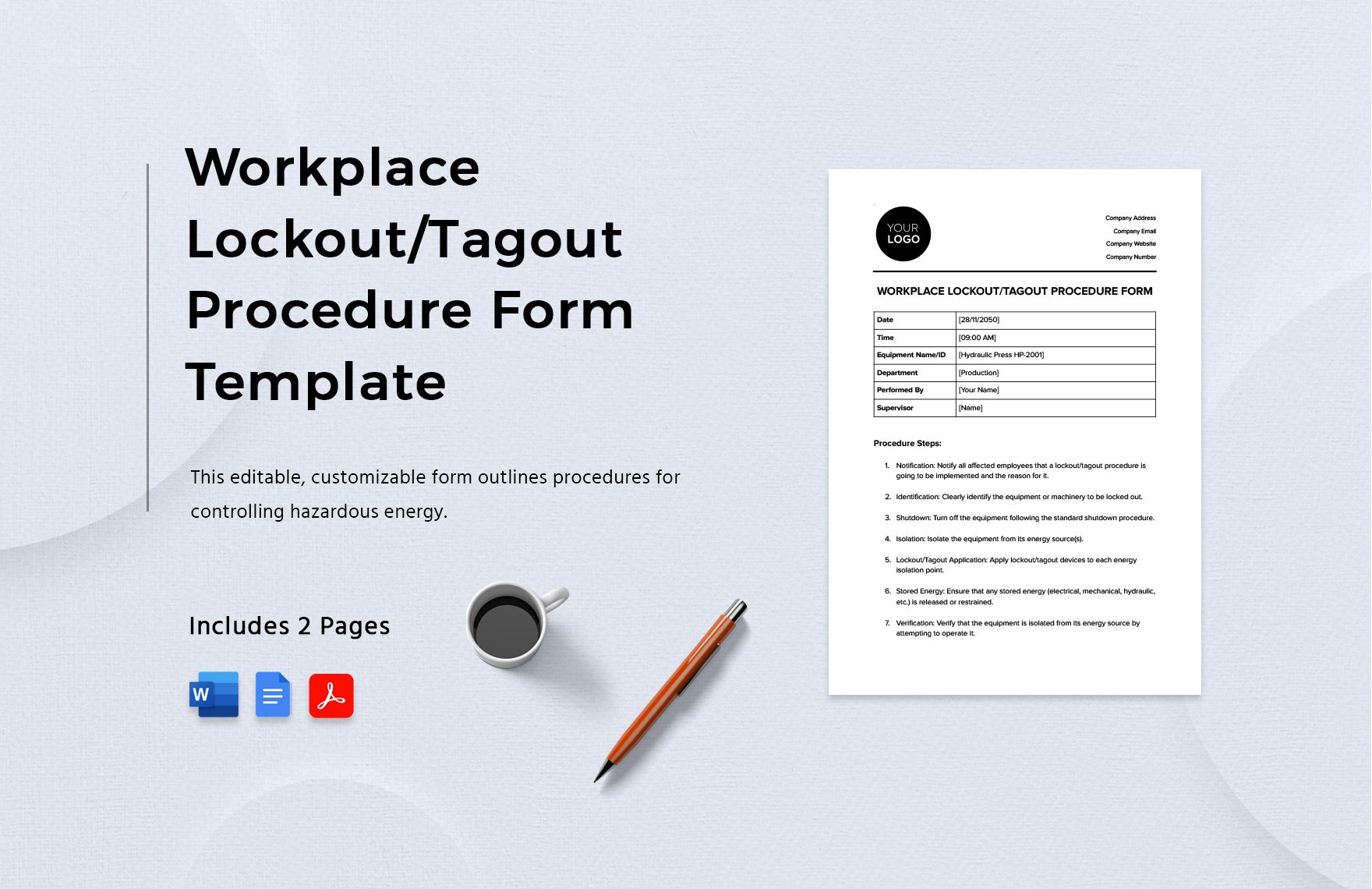
A compliant tagout lockout procedure follows a six-step sequence, each critical to safety:
- Preparation
- Before shutdown, the authorized employee identifies all energy sources (electrical, pneumatic, etc.) and the methods needed to control them. A site-specific energy control plan should be consulted.
- Notification
- All affected employees must be informed of the upcoming shutdown. This includes operators who may need to stop production lines or switch to backup systems.
- Machine Shutdown
- The equipment is turned off using normal stopping procedures—never emergency stops, which aren’t designed for maintenance isolation.
- Isolation and Application
- All energy-isolating devices (circuit breakers, disconnects, valves) are physically opened or closed and secured. If lockout is possible, locks are applied. When only tagout is used, durable tags with clear warnings, employee name, date, and reason for isolation are affixed.
- Control of Stored Energy
- Residual energy must be safely dissipated: capacitors drained, springs uncoiled, elevated parts lowered, fluids bled. Verification is essential—never assume energy is gone.
- Verification
- The authorized employee attempts to restart the machine (without removing tags or locks) to confirm zero energy. If the machine operates or stores energy, the process restarts from step 4.
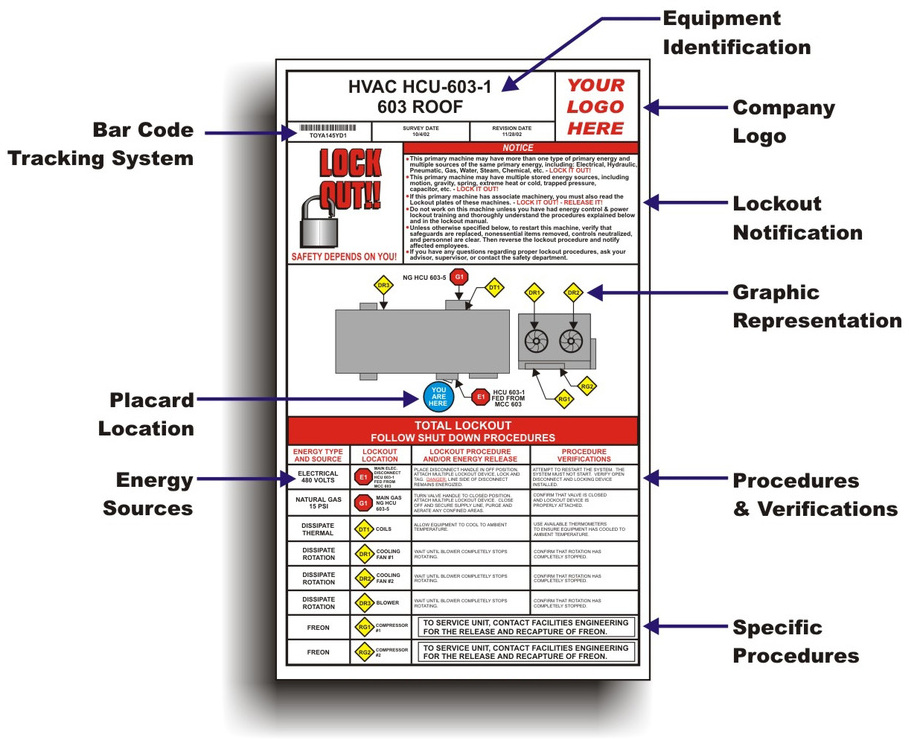
Realistic example: A HVAC technician servicing a rooftop unit shuts down the disconnect switch, applies a personal lock and tag, grounds the circuit, relieves refrigerant pressure, and verifies no voltage with a multimeter. Only then does work begin.
Failure at any step compromises the entire system. A missed hydraulic valve or an illegible tag can undo hours of planning.
When Tagout Is Permitted (and When It Isn’t)
OSHA allows tagout in place of lockout only if: - The equipment design doesn’t accept lockout devices - The employer can demonstrate equivalent protection
However, tagout alone is prohibited in high-risk scenarios such as: - Machines with multiple energy sources - Equipment previously involved in an incident - Processes where remote activation is possible
In such cases, a hybrid approach—lockout where possible, tagout only as a last resort—must be combined with enhanced safeguards like: - Double tagging - On-site supervision - Electronic monitoring systems - Secondary isolation (e.g., blank flanges on pipes)
One wastewater treatment plant addressed this by retrofitting older pumps with lockable disconnects, eliminating reliance on tagout. The investment paid off: in three years, zero LOTO-related near-misses were reported.
Common Mistakes That Undermine Tagout Effectiveness
Even well-documented procedures can fail due to human or systemic errors. The most frequent breakdowns include:
- Tag removal by unauthorized personnel
- A tag is not a lock. Workers unfamiliar with LOTO may remove it, thinking the machine is ready. Solution: Pair tags with procedural knowledge and visible training records.
- Use of generic tags
- “Do Not Operate” tags without names, dates, or specific warnings are easily ignored. Custom tags with employee details and job descriptions increase accountability.
- Skipping group lockout protocols
- In team maintenance, each worker must apply their own lock and tag. The “primary authorized employee” model fails when one person controls all locks.
- Failure to update procedures
- After equipment upgrades, old LOTO steps may not reflect new energy sources. Annual audits and revision tracking are essential.
A food processing facility learned this after installing automated conveyors. The original tagout procedure didn’t account for servo motors that retained charge. After an electric shock incident, they revised all energy control plans and added battery discharge steps.
Building a Compliant and Practical Tagout Procedure
Creating an effective tagout lockout procedure starts with a site-specific energy control plan. This includes: - Equipment inventory with energy source mapping - Written procedures for each machine or process - Training records for authorized and affected employees - Periodic inspections (at least annually)
Workflow tip: Use color-coded tags and locks by department or shift to prevent confusion. For example, maintenance uses red locks, night shift uses blue tags.
Templates help standardize execution, but must be adapted. A boiler maintenance procedure will differ vastly from a CNC machine lockout.
Training is non-negotiable. Authorized employees must understand not just the steps, but the why—how a 0.5-second startup can cause irreversible harm. Affected employees must know not to bypass or remove tags, even under production pressure.
One manufacturing site reduced LOTO violations by 78% after introducing hands-on drills where workers practiced lockout on decommissioned equipment. Realistic simulation builds instinctive compliance.
Equipment and Tools That Support Tagout Success
While tagout relies on human discipline, the right tools enhance reliability:
- Durable Tagout Tags
- Weather-resistant, UV-protected tags with space for signatures and details. Look for pre-printed options with OSHA-compliant warnings.
- Lockout Hasps and Stations
- Allow multiple workers to apply locks to a single isolation point. Stations keep tags, locks, and records organized.
- Valve and Plug Lockouts
- Prevent accidental opening of gas, steam, or fluid lines during maintenance.
- Electrical Lockout Devices
- Circuit breaker locks, outlet covers, and plug lockouts ensure electrical isolation.
- Group Lockout Boxes
- Secure multiple keys so no machine can be re-energized until all workers remove their locks.
These tools transform procedural compliance into physical enforcement. A pulp mill reduced unauthorized restarts by using group lockout boxes tied to shift handover logs—ensuring continuity across teams.
Final Checks Before Restoring Equipment
Re-energizing equipment is as critical as shutting it down. Before removing tags and locks: - Confirm all tools are removed - Verify all personnel are clear of the machine - Ensure guards and safety devices are reinstalled - Notify all affected employees of restart
Remove locks and tags in the reverse order of application. Never use a master key to bypass a worker’s lock unless under emergency protocols with proper documentation.
A paper plant avoided a potential fatality when a supervisor noticed a safety guard wasn’t reinstalled before restart. The tag remained in place until corrections were made—proving that final verification isn’t a formality, but a necessity.
A tagout lockout procedure is more than a compliance checkbox—it’s a culture of safety built on precision, accountability, and respect for energy’s destructive potential. Whether you’re maintaining a single pump or managing a plant-wide shutdown, the difference between a safe outcome and a catastrophe lies in consistent execution. Audit your procedures, train relentlessly, and never accept tagout as a substitute for lockout unless rigorously justified. Start today: review one LOTO procedure, walk through it on the floor, and verify every step. Safety isn’t inherited; it’s enforced.
FAQ
What should you look for in What Is a Tagout Lockout Procedure and How to Implement It? Focus on relevance, practical value, and how well the solution matches real user intent.
Is What Is a Tagout Lockout Procedure and How to Implement
It suitable for beginners? That depends on the workflow, but a clear step-by-step approach usually makes it easier to start.
How do you compare options around What Is a Tagout Lockout Procedure and How to Implement It? Compare features, trust signals, limitations, pricing, and ease of implementation.
What mistakes should you avoid? Avoid generic choices, weak validation, and decisions based only on marketing claims.
What is the next best step? Shortlist the most relevant options, validate them quickly, and refine from real-world results.